Science
Science Education
Anchor units on life cycles, anatomy, diet, and animal behavior with weekly observation logs.
- Life cycle units
- Observation journaling
- Habitat design
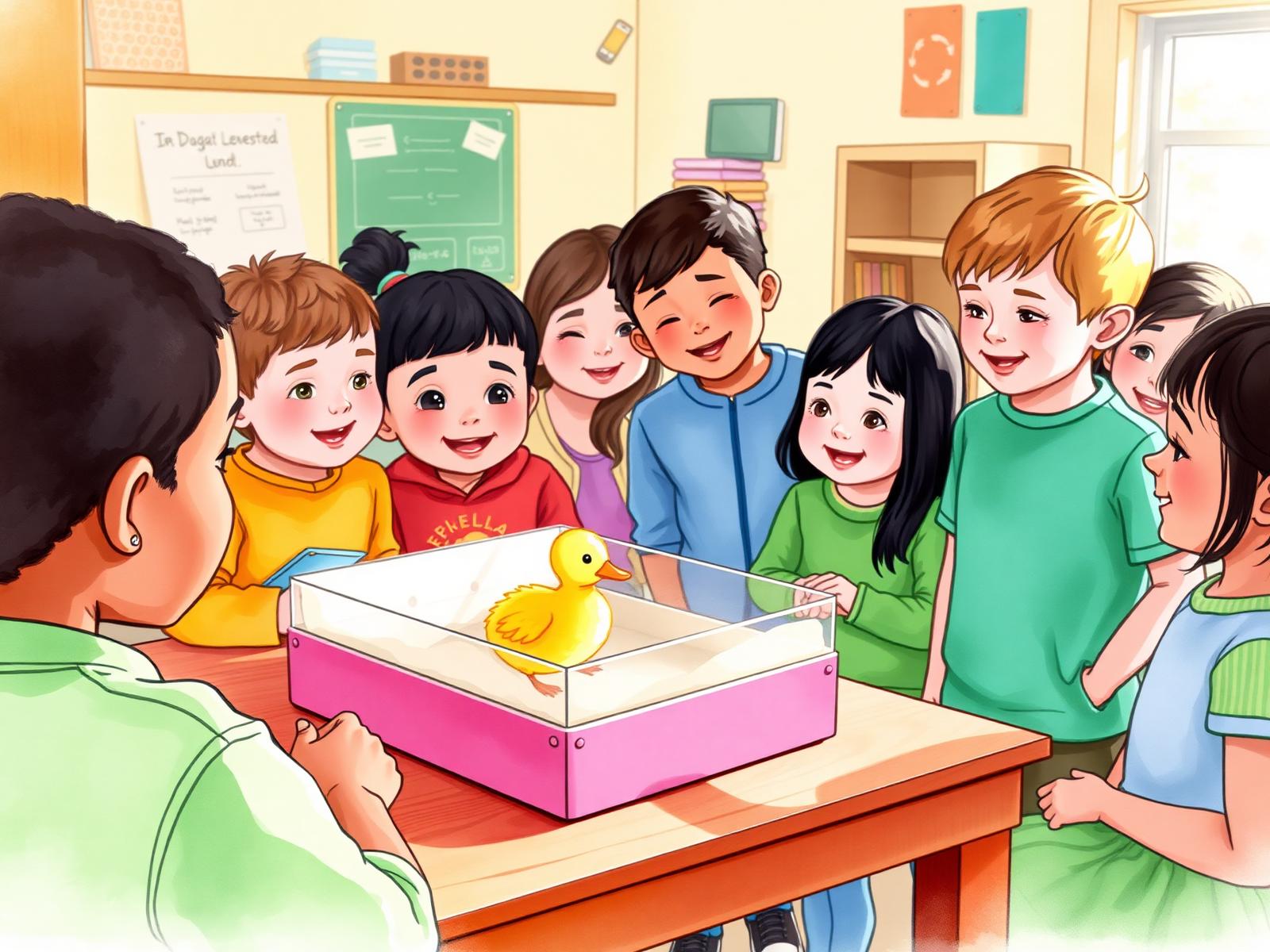
A supervised, ethical classroom duck turns everyday lessons into hands-on biology, empathy practice, and a routine your students will actually look forward to.
Why a classroom duck?
Carefully designed programs use a classroom duck as a gentle anchor for curiosity, empathy, and structured learning across subjects.
Daily care builds accountability in age-appropriate, rotating roles.
Observation journals, life cycles, anatomy, and habitat lessons.
Caring for a small animal nurtures patience and gentle behavior.
Predictable feeding and cleaning schedules anchor the school day.
Reluctant learners light up around a real, living classmate.
Connect lessons to ecology, ethics, and community responsibility.
Learning benefits
Each benefit area maps to grade-appropriate lesson scaffolds and reflection prompts.
Anchor units on life cycles, anatomy, diet, and animal behavior with weekly observation logs.
Rotating Duck Duty roles teach planning, follow-through, and peer accountability.
A calm classroom companion supports regulation, empathy, and gentle social interaction.
Connect classroom care to wetland ecosystems, biodiversity, and stewardship.
Students plan, problem-solve, and reflect together as a small community of carers.
How it works
Our framework gives schools a clear path from interest to a thoughtfully run classroom duck experience.
Every interaction is led by trained staff with a clear classroom protocol.
Feeding, cleaning, and quiet-time slots structured into the school day.
Age-appropriate roles rotate so every learner takes part respectfully.
Handwashing routines, dedicated supplies, and clean enclosure design.
Welfare-first standards guide environment, diet, and downtime for the duck.
Safety & care commitment
A classroom duck is a living animal — not a novelty. Our commitment is to ethical, hygienic, and well-supervised programs that respect the duck and protect students.
A note from us: if your school cannot meet welfare standards, our guide will help you choose alternative duck-themed learning experiences instead.
Welfare-first standards reviewed with veterinary guidance.
Adult oversight at every interaction, no exceptions.
Handwashing, sanitization, and dedicated cleaning kit.
Long-term plan for the duck's care during breaks and beyond.
Interactions scaled to grade level with clear ground rules.
Teacher testimonials
Our morning routine completely changed. Students arrive early just to check on Pip — and stay engaged through our science unit.
The Duck Duty rotations gave my most reluctant learners a sense of purpose. Their observation journals are some of their best writing all year.
Parents were skeptical at first. After seeing the welfare plan and lesson tie-ins, they became our biggest advocates.
Download our free Classroom Duck Guide, explore our pilot program, or chat with our education team to see if it's a fit for your school.